
Frequently Asked Questions (FAQ)
If you have any questions about how our products work, or whether a twist tie machine, tape bag sealer, impulse bag sealer, mechanical label dispenser, or other product is right for your needs, take a look at our questions and answers below. If you can’t find what you’re looking for, please reach out to our team, and we’ll be happy to assist you!
Categories:
- Definite-Length Tape Dispensers
- Tape Dispensers & Applicators
- Label Dispensers & Applicators
- Automated Labeling Solutions
- Shipping Room & Packaging Tools
- Twist Tie Machines
- U.L. Recognized Cable Ties, Bundling Ties & EZ Twist Locks
- Tag Attaching & Joining Systems
- Tape Bag Sealers
- Impulse Bag Sealers
- Mechanical Label Dispensers
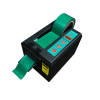
A definite-length tape dispenser is a tool that automatically dispenses and cuts a precise, pre-set length of tape each time you activate it—removing the need to manually measure, pull, and cut the tape yourself.
You can adjust the tape length using the up and down arrow keys on the control panel and the inputted length is shown on the LED display. The up and down arrows are used to enter the length you need (in mm), and the machine will automatically feed and cut that exact size for every cycle—no measuring or guessing needed.
Most models handle 1/4″–3″ wide, pressure-sensitive or filament tapes up to 8 mil thick. Refer to model specs for exact ranges.
Our heavy-duty definite-length tape dispensers (6115, 6180, 6605) are built for durability, versatility, and safety. Unlike traditional models, our heavy-duty units feature:
• All-steel gears and shafts for long-lasting performance, even in demanding environments
• Heavy Duty Motor
• An exclusive safety shield to protect operators during use
• The ability to cut a wide variety of tapes, including carton sealing, packaging, filament, acetate, masking, flat back, and more
These features make them ideal for industrial and high-volume applications where strength and reliability matter most.
Our units have four programable memory presets.
Our definite-length tape dispensers offer three operating modes to suit different workflows:
1. Random Mode
The operator manually controls the tape feed. Press the feed button until the desired length is reached, then press the cut button to cut the tape.
2. Semi-Automatic Mode
The machine feeds and cuts a pre-set length of tape. When the operator is ready for the next piece, pressing the cut button feeds and cuts the next length automatically.
3. Automatic Mode
The dispenser continuously feeds and cuts tape to the pre-set length. As soon as one piece is removed, the next is automatically fed—ideal for high-volume or fast-paced environments
4. Sequential Mode
the machine will feed the tape sequentially based upon the 4 memory presets. When this mode is activated, the tape length set in Preset A will feed, then Preset B, then Preset C, then Preset D. If less than 4 lengths are needed, a 0 length in a Preset will bypass that preset. This is perfect for repetitive taping and for “H” sealing of cartons.
Yes! Any of our tape dispensers equipped with program buttons can be programmed to automatically dispense the specific tape lengths needed to create an H-pattern for box sealing. This makes the process faster, more consistent, and ideal for repetitive packaging tasks.
Periodically clean the tape path, inspect the cutting blade for wear, and ensure sensors (if equipped) are free of dust and adhesive buildup.
Hand-held dispensers are ideal for portability and low-volume use due to their mobility and cost-effectiveness. Bench-mount units, on the other hand, automate the feeding and cutting process—offering faster and safe operation and more consistent tape application.
Only if the dispenser is specifically designed for gummed (water-activated) tape. For best performance and reliability, use a dedicated water-activated tape dispenser.
Place the tape core onto the spindle, guide the tape under the roller, and secure the tension arm. Most dispensers are designed to prevent incorrect loading, which helps reduce the chance of jams.
Common safety features include blade guards, non-slip grips, and automatic shutoff functions (on bench-top models) to reduce the risk of accidental cuts.
First, make sure the tape path is clear and the tension is properly set. Check that the blade is clean and sharp. In most cases, clearing debris and inspecting the blade will resolve the issue.
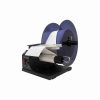
Label dispensers remove the label backing so an operator can manually apply each label. Applicators go a step further—automatically placing the label directly onto the product or package.
Most standard models support core diameters of 3 inches and roll widths from 0.75″ to 8″. Label lengths of ½” to 14” is not a problem. Need more flexibility? Specialty units are available for larger or non-standard sizes.
Speeds vary by label size and application, but most semi-automatic units can apply 300 to 800 labels per hour. Fully automatic systems can process several thousand per hour.
Hand-held labelers are manual and require no external power. Bench-top and semi-automatic units plug into a standard 110–120V outlet—no air supply needed for most models. Unlike competitors, we do not require a dedicated electrical circuit for our machinery.
Absolutely. Our dispensers and applicators handle a wide range of adhesives, including pressure-sensitive, tamper-evident, and even RFID-enabled labels, thanks to their spring-loaded peel plates and efficient feed mechanisms.
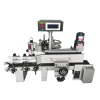
Automated labeling systems use integrated sensors, conveyors, and PLC controls to detect products, position them accurately, and apply labels—all with no manual intervention.
Throughput typically ranges from 40 to 80 products per minute, depending on factors like label dimensions, product shape, and conveyor speed.
Yes. Modular applicator heads can be configured for multi-panel, wrap-around, or sequential labeling—applying multiple labels in a single pass.
We offer full support including onsite setup, software configuration, and training. Our goal is seamless integration into your production line with minimal downtime.
Yes. The Mini-Con R and ALR models use a roller-based application system to wrap labels smoothly around cylindrical items like bottles, tubes, and jars.
Most units include quick-change roll holders and adjustable peel-plate guides. For standard adjustments, no tools are needed—making format changes fast and user-friendly. Timers and touch screen controllers are used to adjust for label size. Touch screen controllers on automated models have 5 memory presets for computer settings and some models use encoder technology for easy setup.
What qualifies as “shipping room” equipment?
Scales, label printers, carton erectors, bench scales, and void-fill stations—everything downstream of primary packaging.
Yes—height-adjustable frames, shelf kits, and mobile stands can be configured around any packing or labeling tool.
Our scales support RS-232 and USB, while printers offer network and USB connectivity—enabling weight-triggered label printing.
We partner with top providers for Air-pillows, foam-in-place, and paper cushion systems—select based on your package protection needs.
Many workstations and accessories can be powder-coated in your brand colors or fitted with custom signage and placards.
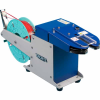
Twist tie is the most consumer friendly closure available. It is easy to use, reusable, removable without damaging the bag, works well in freezers, and is an inexpensive option.
Yes! We provide several twist tie machine models.
- Model #3567 is our most popular automatic twist tie machine. It’s perfect for bakeries, supermarkets, food services, and other food related applications
- Model #3568 is a more durable option, fully automatic, and is designed for 24/7/365 use
- Model #3570 is a fully automatic machine that features an adjustable diameter between 1/8” to 1 3/8” for larger bags, such as multiple unit packs
- Model #3510 is a hand held, battery powered, rechargeable machine. It comes with two batteries for a full day of productivity and is lightweight to be brought almost anywhere
View our full lineup of twist tie machines by clicking here.
How large of a bag a twist tie machine can seal depends on its width and thickness. Some of our models feature adjustable tying diameters, so you can tailor them to your specific operation. Each of our individual product pages says what the maximum tying diameter is for that particular machine. Click here to view our product pages.
We carry several different types of twist tie ribbon, made from various materials and available in a range of colors. Click here to see all of our options.
Our 17-200 twist tie ribbon does not contain any metal.
Our 17-200 twist tie ribbon does not contain any metal.
All of our twist tie machine models provide four twists for an extra tight seal.
Each of our rolls contain between 9,500 and 9,800 twist ties.
Our twist tie machines use either 3” or 4” long twist ties. Click here to visit webpages for each individual model and see their specifications.
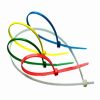
This designation confirms that the product meets rigorous Underwriters Laboratories (U.L.) standards for flame resistance, tensile strength, and performance in various environmental conditions.
Select based on your bundle diameter and required tensile strength. Our catalog includes maximum bundle outer diameter (O.D.) and break strength ratings for each model to ensure proper fit and performance.
The EZ Twist Lock is a reusable, tool-free bundling tie. Its one-piece design makes it ideal for temporary installations, cable routing, or frequent maintenance tasks.
Yes. We offer standard colors as well as custom imprinting—perfect for branding, inventory control, or safety color-coding. Minimum order quantities apply.
Absolutely. We provide UV-resistant and weatherproof options specifically designed for outdoor use or exposure to chemicals and extreme temperatures.
Our systems accommodate a wide range of fastening methods, including retail barbed fasteners, plastic staples, metal staple guns, and pneumatic taggers—suitable for everything from light-duty tagging to heavy industrial applications.
Most taggers feature a quick-release mechanism. Simply disengage the current head using the latch, attach the new applicator module, and you're ready to go—no tools required.
Built-in safety elements include trigger locks, two-stage trigger mechanisms, and guarded fastener paths to reduce the risk of accidental firing and minimize jams.
Standard hoppers typically hold between 500 and 1,000 barbs or staples, depending on fastener type and size, allowing for extended use before reloading.
Yes—we offer manual, pneumatic, and battery-powered electric taggers. Whether you need portability for field use or speed for high-volume environments, there’s a model to fit your needs.
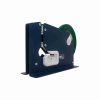
Tape bag sealers are economical and apply a secure seal around the top of the bag using adhesive tape and creating an adhesive-to-adhesive flag seal. The advantage of tape is that it’s non-metallic to avoid metal detection.
Bag tape is typically applied on products that are one and done, because the bag may be destroyed during opening. They are commonly used in the food service and food product industries, because tape is inexpensive and can be discarded after use.
Our E7R and E7R-SS tape bag sealers are very similar, but the E7R-SS is stainless steel, making it suitable for food and wash down applications.
Our E9 model is designed for larger bags up to 3/4” in diameter where the seal is applied.
Our 3235 machine creates a seal that can be opened without damaging the bag, in situations where the bag should be reused.
Our machines use either 3/8” or ¾” wide tape. Click here to view our different types of tape and which machines they are compatible with.
The maximum tying diameter for all machines is 3/8”, except for our E9 model, which has a maximum tying diameter of ¾”.
Yes! The E7R, E7R-SS, and 3235 can be mounted in a vertical orientation, while the E9 can be mounted either vertically or horizontally.
No, tape is sold separately. Our team will help you buy the right tape when you purchase your machine.
No, all of our models are mechanical, so there are no batteries to recharge, and you don’t need to plug them in!
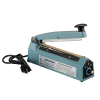
An impulse bag sealer provides an airtight, tamper evident seal. Plus, because it uses heat to weld the two sides of the bag together, you do not need to purchase any tape, ties, or other consumables. Our impulse bag sealer models work with most types of plastic bags except for cellophane.
Impulse sealers use an electric impulse through a heating element to create the seal, whereas heat sealers use an actual temperature setting to melt the layers of plastic together. Impulse sealers are ideal for narrower seals, while heat sealers are better for wider seals. For example, the seal on a bag of snack chips, which is wide, will be best done by a heat sealer, but the seal on a package of socks, which is very narrow, is better handled by an impulse sealer. Impulse bag sealers are also safer than heat sealers, as there is no standing heat like there is with a heat sealer.
To see our full lineup of impulse sealers, click here. Below are some of the basic differences between our models:
- HJ machines – Table top – the operator must hold the handle down to complete the seal
- HJC machines – Table top – the operator must hold the handle down to complete the seal
These machines have a manual slide cutter to remove excess plastic bags - HI machines – Self standing – the operator uses a mechanical foot pedal to activate the machine
- HA machine – tabletop automatic machine – uses an electric foot pedal and has a cooling cycle to ensure a good seal
You can seal bags from 4” wide to 24” wide, based on the specific model you’re using. Each machine has the length as part of the model number in millimeters. For example, for our HJ310/2T model the length is 310 mm or 12”.
We offer seal widths from 1.5mm to 5mm, based on the specific model you’re using. Each machine has the seal width as part of the model number in millimeters. For example, for our HJ310/2T the seal width is 2 millimeters wide.
All impulse sealers work on time. We suggest that during setup, the timers on the machine are set to the lowest setting and a seal is tested. Once the seal is created, check it, and if it’s not satisfactory, increase the timer by small intervals until the required seal is achieved.
- HJ and HJC machines – The operator places the bag between the top bar and the seal bar and pushes the handle down until the light on the timer goes out. When cutting the excess plastic with the HJC, slide the blade across the length of the top bar.
- HI machines – The bag is placed between the top sealing bar and the lower sealing bar. The operator steps on the foot pedal until the light next to the timer goes out. At that time, the operator releases the foot pedal and removes the sealed bag.
- HA machines – The HA series uses an electronic pedal which can be on the floor and activated by foot or on a table and activated by hand. The HA series machines have both a heating timer and a cooling timer. The cooling timer allows the plastic to congeal, creating a wider seal. The bag is placed between the top sealing bar and the lower sealing bar, and the pedal is pressed to activate the machine. At the end of the cycle, the top sealing bar will open to allow removal of the bag.
Our HJC Series machines have a manual slide cutter to remove excess plastic.
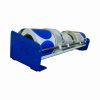
Our mechanical label dispenser models hold rolls of labels up to 7” in diameter. The label is dispensed by an operator pulling the liner, which separates the label from the liner for easy removal and application. They are easy to use, don’t require any electricity, and are commonly found in shipping rooms, supermarkets, restaurants, food service, industrial operations, manufacturing facilities, and anywhere else labels are used.
We offer both PDL and MDL label dispenser models. Here are the basics of each type:
PDL Mechanical Label Dispensers:
- For tabletop use only
- They work with a single roll of labels or multiple rolls of labels
- Separators are included to go between rolls of labels and avoid the incorrect label dispensing
- Any core size on the label roll can be used with the PDL dispensers
- Each roll of labels is independent – rolls can be easily changed without disturbing other rolls of labels
- Our PDL label dispensers are available in widths from 3” to 24” wide
- PDL models are the preferred option for tabletop applications
MDL Mechanical Label Dispensers:
- Our MDL mechanical label dispenser models can be mounted on a wall to save table space or used on a table
- They work with both a single roll of labels or multiple rolls of labels
- They come with 3” core holders for standard rolls of labels. Other labels with different core sizes can be used by putting the shaft through the center of the rolls
- It is more difficult to change rolls of labels than with PDL models, as there is a shaft inside the core holders on each roll of labels. If there are multiple rolls of labels installed in the machine, these may need to be removed to replace an inside roll of labels
- MDL models are the preferred option for operations where space is limited, as they can be mounted vertically on a wall