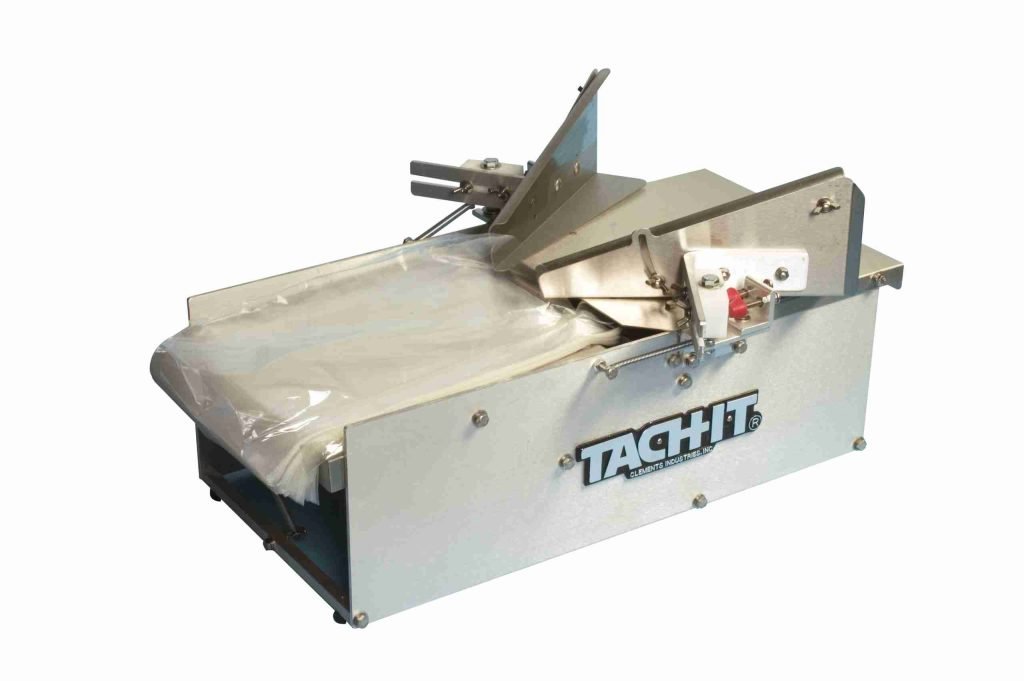
Bagging is one of those processes that looks simple until you try to scale it. At low volumes, manual bagging gets the job done. But as output increases, the small inefficiencies start to compound. Opening bags takes longer than expected. Operators work at different speeds. Closures vary. And before long, what should be a straightforward process becomes a source of lost time and inconsistent results.
At Tach-It, we don’t look at bagging as a single step. We look at it as a connected workflow that starts with how the bag is opened and ends with how it is sealed.
When each step is aligned, everything downstream improves.
The Hidden Cost of Manual Bagging
Most operations don’t notice bagging as a problem right away. It usually shows up indirectly.
You see it in:
- Slower than expected throughput
- Operators falling out of rhythm
- Inconsistent package appearance
- Increased labor to maintain output
The root issue is not one specific task. It is that each step—opening, filling, sealing—is being handled independently instead of as a system.
That lack of continuity creates friction. And friction is what slows production.
Step One: Stabilizing the Process with Bag Opening
Before anything is inserted into the bag, the process has already been defined. If the bag is difficult to open, inconsistent in position, or constantly shifting, everything that follows becomes harder. Operators compensate in different ways, which leads to variability in speed and handling.
This is where a wicketed bag opener changes the dynamic. Instead of manually separating and opening each bag, the machine presents it in a consistent, open position every time. The operator no longer has to “prepare” the bag. They can move directly into filling it.
The impact is immediate:
- The motion becomes repeatable
- The pace becomes steady
- The operator stays focused on the product, not the packaging
What seems like a small improvement at the start of the process ends up setting the tone for the entire workflow.
Filling Becomes Faster When Opening Is Controlled
Once the bag is consistently open and positioned, filling becomes a much more natural step. Operators are no longer adjusting their grip, repositioning the bag, or pausing to reopen it. Instead, they fall into a rhythm where product placement becomes predictable and efficient.
This is where you start to see real gains in throughput. Not because the filling process itself changed, but because the variability was removed upstream. In many cases, companies expect to improve output by adding more labor. In reality, improving the flow of the process often delivers better results without increasing headcount.
The Closing Step Is Where Consistency Shows
If opening defines the pace and filling defines the flow, closing defines the final result. This is the step customers actually see. It affects both functionality and presentation.
Tach-It offers multiple closing methods because not every application is the same. The goal is not to force a solution—it is to match the closure method to the product and environment.
Twist Tie Systems
For applications like produce, bakery, and food packaging, twist tie machines provide a balance of speed and presentation. They create a consistent closure that is secure but still easy for the end user to open. In high-volume environments, this consistency matters. Each bag looks the same, feels the same, and performs the same.
More importantly, the operator is not manually tying each bag. The machine standardizes the process without slowing it down.
Tape Bag Sealers
Tape sealing is one of the most widely used methods for a reason—it works across a broad range of applications. Whether you are packaging consumer goods, industrial parts, or general merchandise, tape sealers provide a fast and reliable closure without requiring complex setup.
What stands out here is not just speed, but repeatability. Every bag is sealed in the same position, with the same amount of material, regardless of who is operating the machine. That level of control reduces waste and improves overall consistency across production.
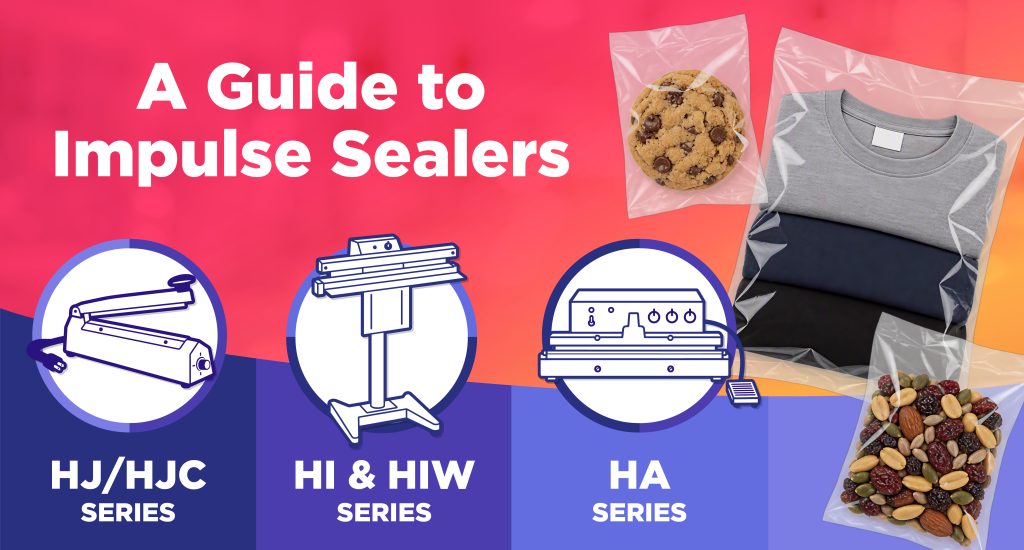
Impulse Sealers
When the application requires a more permanent or protective seal, impulse sealing becomes the right choice. This method creates a uniform sealed edge that helps contain product and maintain integrity during handling and transport.
It is especially effective in high-volume environments where:
- Seal strength matters
- Product containment is critical
- Consistency must be maintained across long runs
Unlike manual sealing methods, impulse sealers remove variation from the process and deliver a clean, repeatable result every time.
Bringing It Together: A Complete Bagging Workflow
Individually, each piece of equipment improves a specific step. Together, they create a system.
A typical optimized workflow might look like this:
There are no unnecessary movements. No rework. No variation between operators.
The process becomes predictable. And when a process is predictable, it becomes scalable.
Entry Level Automation in Real Terms
Most companies are not looking to jump into full automation. They need something that improves performance without introducing unnecessary complexity. That is exactly where Tach-It fits.
Our approach to bagging follows the same principle as the rest of our product line:
- Start with the step that slows you down
- Improve it with simple, reliable equipment
- Build from there as your needs grow
This is what Entry Level Automation is meant to do. It bridges the gap between manual work and full automation in a way that makes sense operationally and financially.
Bagging should not be the step that limits your output. The equipment does not need to be complicated. It just needs to work together. And when it does, the results are easy to see. Learn more about all of our bag opening and sealing options.